Air stage
Stage 1
Composite air filter
Removes dust and allergens from intake air. Its own indicator on the panel tracks life; replacing it is a cover press and a swap.


Technology
Atmospheric water generation isn't new physics. Doing it cleanly, quietly, and repeatably in a countertop enclosure is the engineering problem the S20 was built to solve.
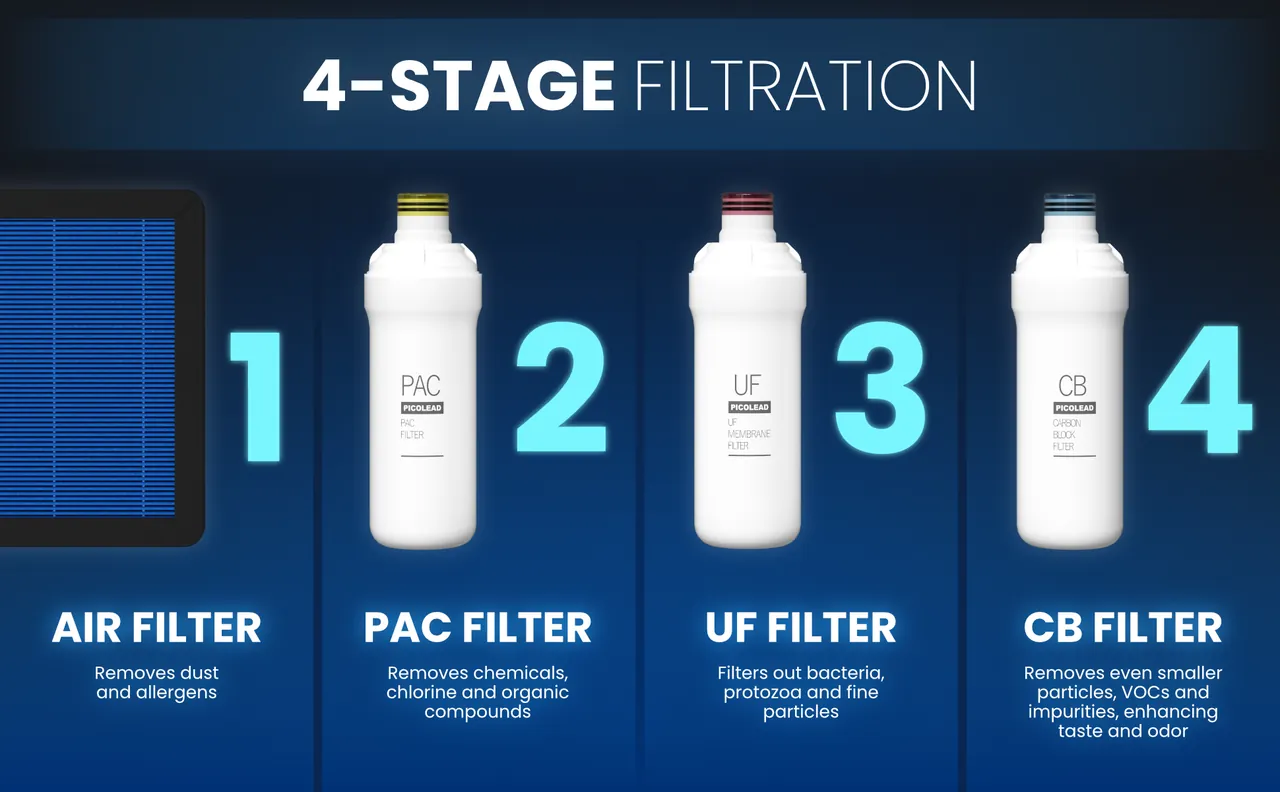
The cycle
A fan pulls room air across a medium-efficiency composite filter that captures dust and airborne particles before anything reaches the cold surfaces.
A piston compressor running R134a chills the evaporator below the dew point of the incoming air. Moisture condenses out as liquid water and drains into the 0.9 gal (3.5 L) collection tank.
Water is pumped through PAC, then an ultrafiltration membrane, then a carbon block cartridge — chemistry first, biology second, taste last.
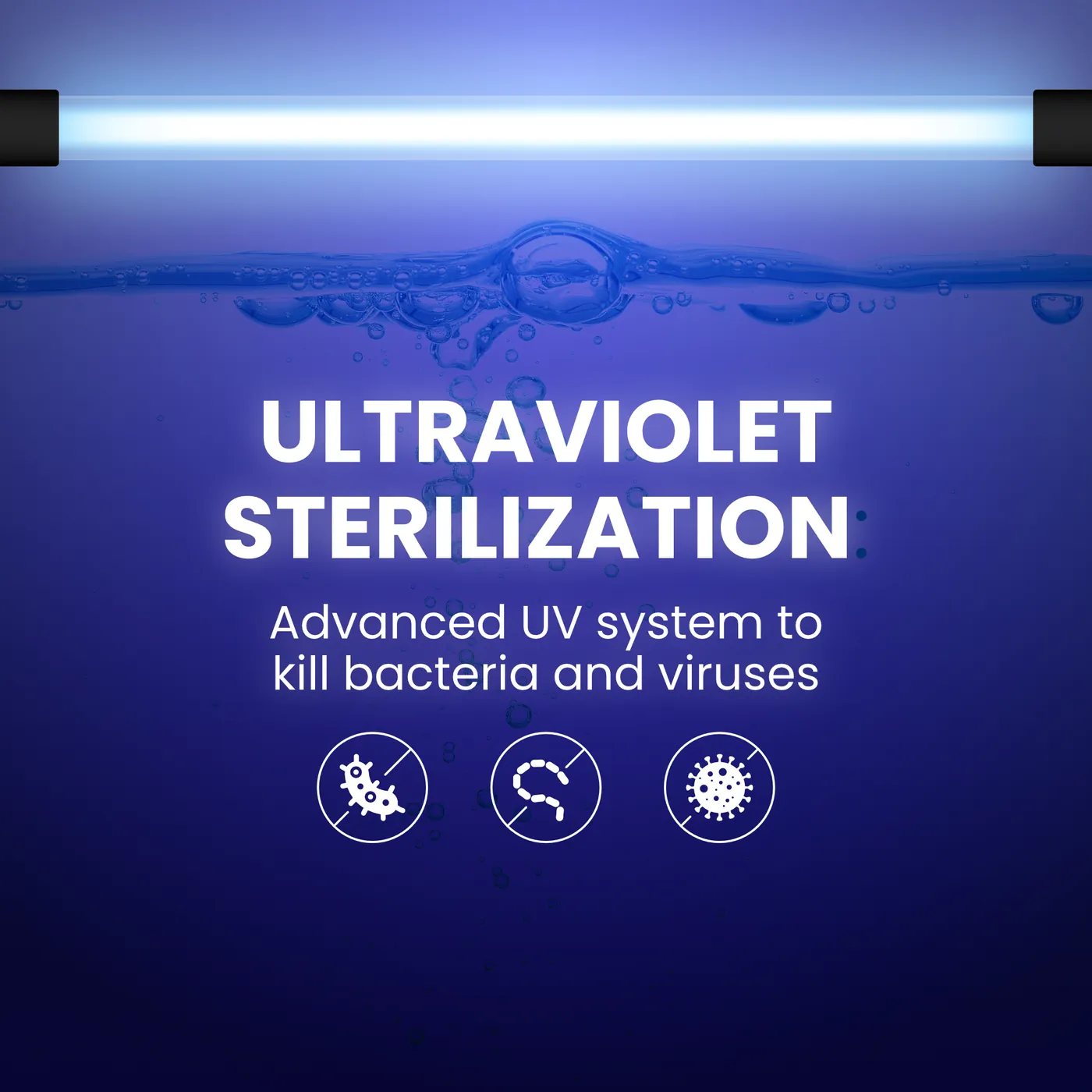
A UVC module in the purified tank runs its own cycle on the stored 0.4 gal (1.5 L), so water that sits is treated as carefully as water that moves.
The ready tank is held at 50–57°F (10–14°C). Press and hold dispense for up to about 40 oz/min (1.2 L/min).
Filtration train
Removes dust and allergens from intake air. Its own indicator on the panel tracks life; replacing it is a cover press and a swap.
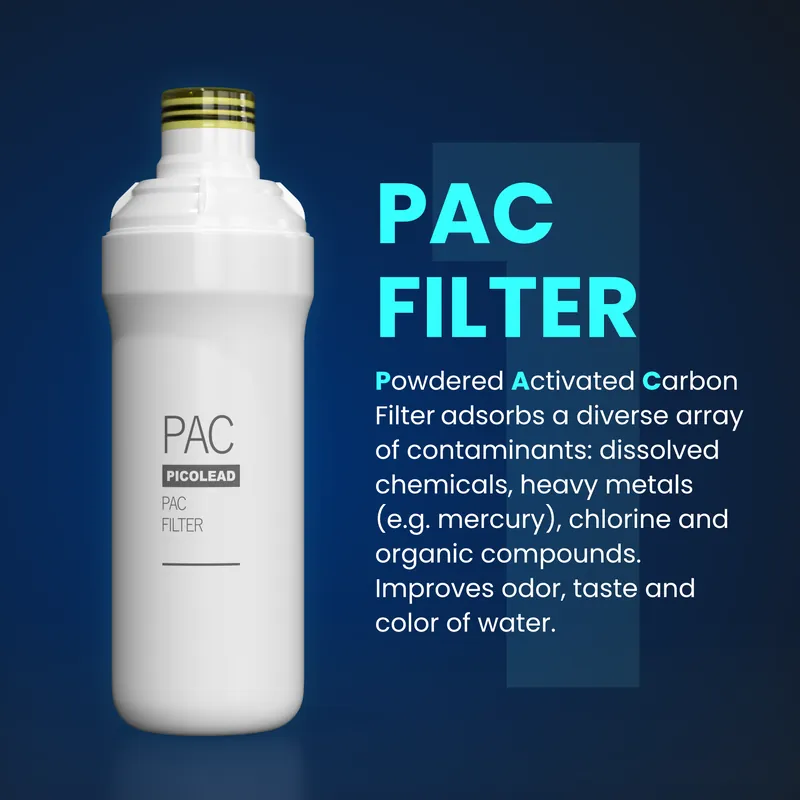
Powdered activated carbon adsorbs chlorine, organic compounds, and chemical residues carried in by the air.
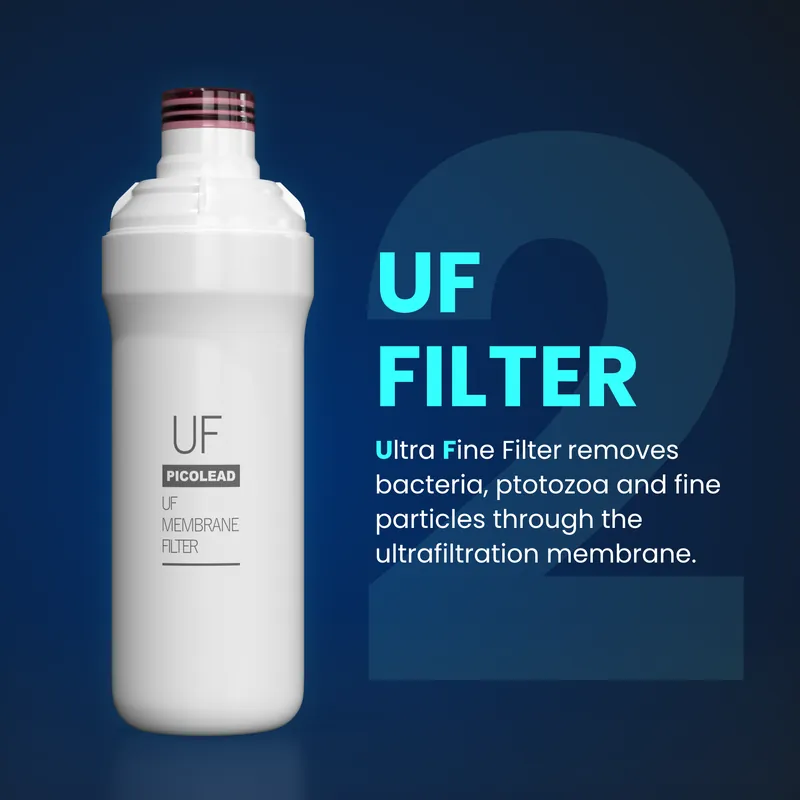
Ultrafiltration screens out bacteria, protozoa, and fine particulate without the wastewater stream that reverse osmosis produces.
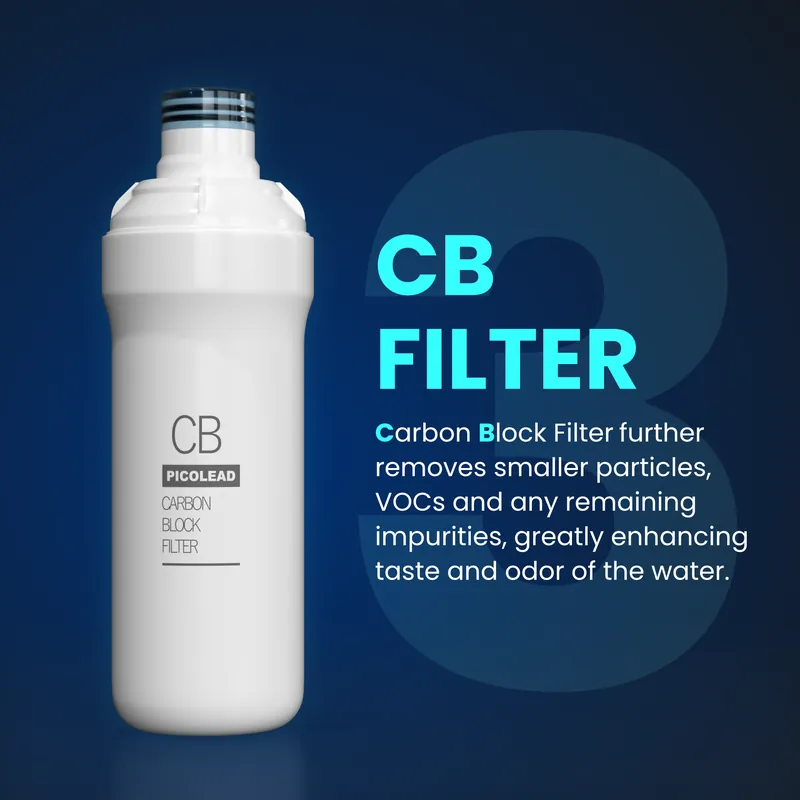
A final polish for the smallest remaining particles and VOCs — the stage that decides how the water actually tastes.
UVC
Most countertop purifiers treat water once, on the way through. The S20 places a UVC module at the base of the purified tank so water waiting to be dispensed is continuously covered. When cleaning the tank, the manual is explicit: never submerge that module, and never use alcohol or solvent-based cleaners.
Honest expectations
The rated 2.6 gallons/day (10 L/day) figure is measured at 86°F (30°C) and 80% relative humidity. That is the ceiling, not an average. The machine operates from 41–90°F (5–32°C) and 35–90% RH, and it produces the most water in warm, humid air. Below 35% humidity the panel flashes the humidity reading and production slows considerably — which is exactly when the external-fill mode earns its place.